

 01745 799783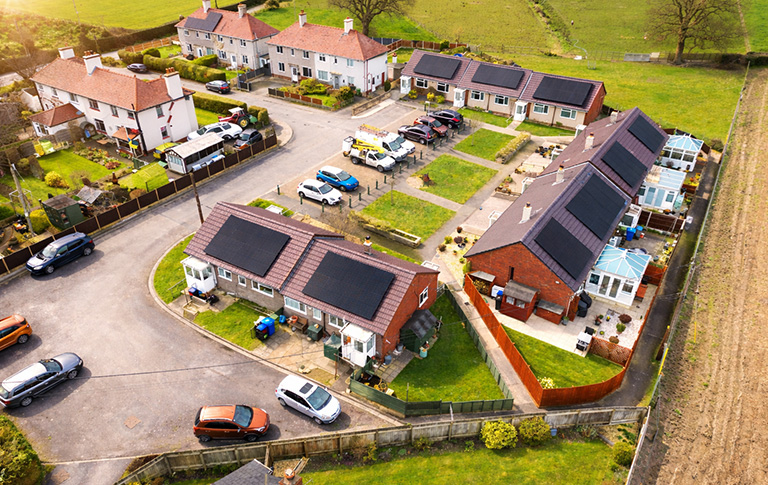
What it means for your home and what you can do about it
Across the UK, household energy bills have climbed to levels that many people never expected to see. The frustration is understandable. It is not just the cost itself that stings, it is the lack of clear explanation for why it keeps happening and whether anything can actually be done about it.
The honest answer is that energy prices in the UK are not set here. They are shaped by international gas markets, global supply chains, and geopolitical events entirely beyond the control of any household or government. When supply is disrupted or demand spikes globally, the cost gets passed down the line to domestic bills. That pattern has held for several years now, and there is little reason to expect it to change fundamentally in the near future.
At the same time, the UK is in a period of transition. The shift away from fossil fuels and towards renewable energy is underway, but the infrastructure needed to replace gas-based heating at scale is still being built. The result is an energy system caught between two states, and household bills that reflect the uncertainty of that position.
The problem inside your home
Global energy markets explain part of the picture. The rest is closer to home. Many properties across North Wales, Cheshire, and the wider North West were built long before modern energy efficiency standards existed. They lose heat through poorly insulated walls and roofs, run on heating systems that burn more fuel than necessary, and have controls that offer little real management over how energy is used day to day.
In that context, rising prices do not just hit harder. They expose inefficiencies that were always there but were easier to ignore when energy was cheaper. Turning the thermostat down helps at the margins, but it does not address a home that is losing heat faster than it can be produced. The problem is structural, and a structural problem needs a structural solution.
A different way of thinking about it
What we are hearing from homeowners across the region is a shift in perspective. People are moving away from the question of how to use less energy and towards asking how to make their home better at managing it. That is a significant change, and it leads to much better outcomes.
It means looking at insulation alongside heating. It means considering whether an air source heat pump might replace a gas boiler and deliver more heat from less energy. It means thinking about whether solar panels and battery storage could reduce dependence on the grid, particularly during the peak hours when electricity is most expensive. It means treating the home as a whole energy system, not a collection of separate problems.
PHR works with homeowners, landlords, and organisations across North Wales and the North West to deliver exactly this kind of integrated, low carbon heating and renewable energy solution. We carry out heat loss surveys, assess each property individually, and design systems that work for the building and the household. We also guide customers through available funding, including the Boiler Upgrade Scheme and ECO4, which can significantly reduce the cost of making these improvements.
Energy prices are not going back to where they were. The households that are rethinking their relationship with energy now, rather than waiting for stability that may not arrive, are the ones who will be in the strongest position going forward. If you want to understand what is possible for your property, get in touch and we can start from there.